Culture &
Heritage
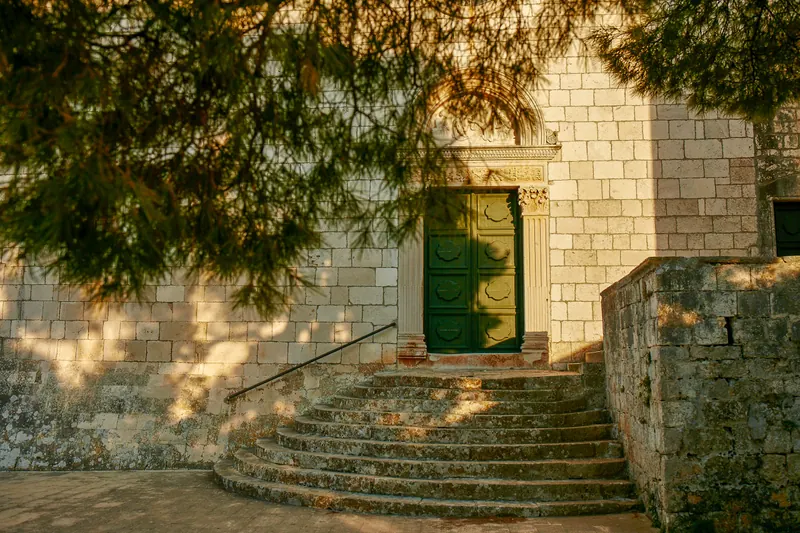
Twenty-four centuries of island life have left their mark in stone, quiet courtyards, and everyday island rhythms.
That living thread stretches from antiquity through the Renaissance and beyond.
It began across the island, in Stari Grad. Greeks from the island of Paros founded their town there in 384 BC and divided the plain behind it into long stone-walled fields. Olives and vines still grow inside the same lines. The Stari Grad Plain is on the UNESCO World Heritage list.
Among its many traces is the first public theatre in Europe, built in Hvar in 1612. On an overcast day, when the beach is not calling, step inside the theatre to watch a short film tracing the island’s past.
Next to our house stands the Franciscan monastery, built in the 15th century on the edge of the sea. It began with the sea: in 1461 the town’s nobles and sea captains paid for its church, in thanks for sailors saved near the island. In its old dining hall hangs a large Venetian painting of the Last Supper, eight metres long. Its bells are old and not shy. At six in the morning, at noon and at six in the evening they strike the day, as they have for centuries.
Above the town, the Fortica keeps watch over the harbour and the Pakleni Islands. Walk up before sunset: the climb is short and the view is the best on the island.
Some traditions are not in stone. The Benedictine nuns of Hvar Town make lace from the fine white thread of aloe leaves; in Croatia only they still do. And after mass on Holy Thursday, six villages in the middle of the island walk the procession “Za Križen”, following the cross through the night from village to village. Both are on UNESCO’s list of living heritage.
Organised tourism here began in 1868, when the town founded a Hygienic Society to welcome guests who came for the air and the sea.
Throughout the summer, concerts and performances bring life to historic courtyards and squares. Above the harbour, the open-air cinema at Veneranda sits within the walls of a 16th-century monastery. If the film doesn’t draw you in, you can always watch the stars and listen to the wind in the pines.